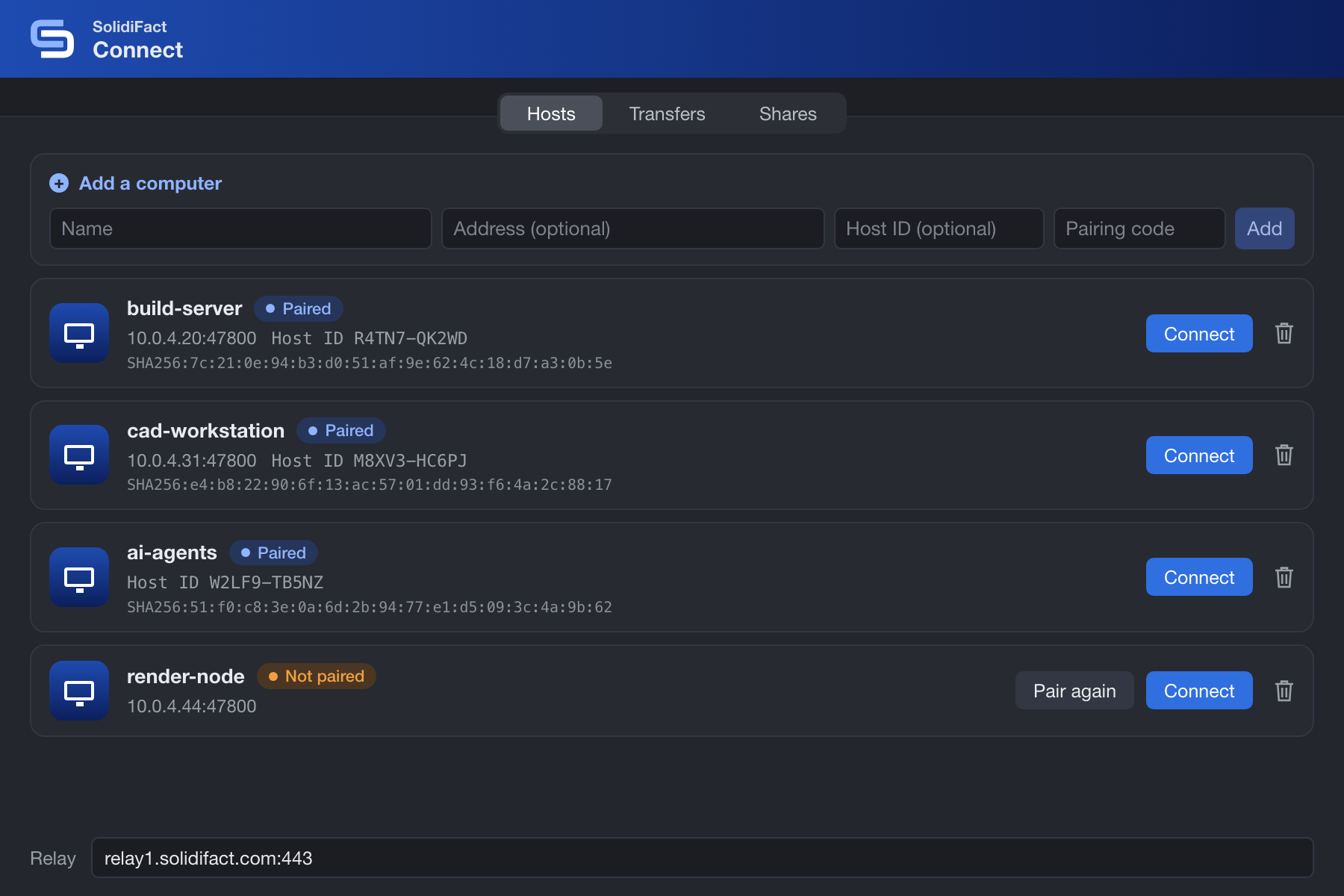
Remote desktop that looks and feels like working on the local machine, and reaches it in any state: asleep, locked or at the login screen.
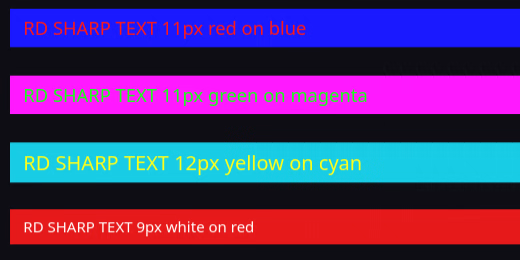
Most remote desktops send 4:2:0 video by default, which halves the colour detail and smears small coloured text. Connect streams full-colour HEVC 4:4:4, encoded and decoded in hardware, with its own bitrate control.
Others sell 4:4:4 as a paid extra. In Connect it is how every session runs.
Measured over Wi-Fi. 5% packet loss had almost no effect.

GNOME 50 removed the X11 session this year, so “switch back to Xorg” is no longer a fix. Connect was built for Wayland.
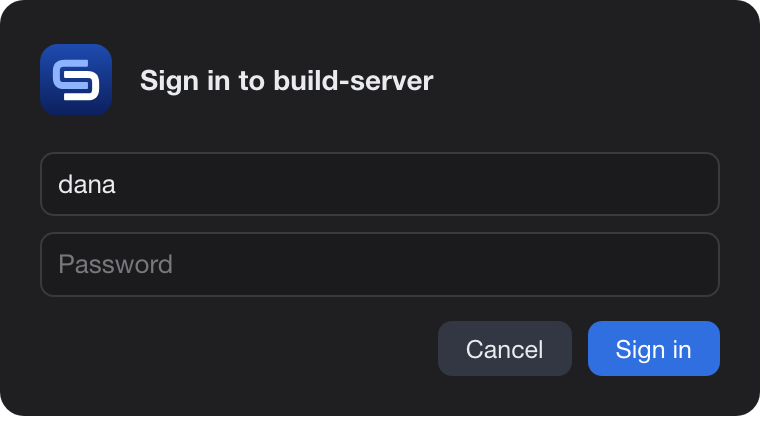
Sign in after a reboot on GNOME and KDE under Wayland, which AnyDesk and TeamViewer can’t. GNOME’s own Remote Desktop can, but only on the local network.
Connect wakes the machine and connects in one step.
Headless Linux servers get a full desktop, with no dummy plug.
Our relay network, with the first relay in Toronto, or your own. It also works on phone networks that only offer IPv6.
| Tool | Colour detail | Wayland login screen | No monitor attached |
|---|---|---|---|
| AnyDesk | No 4:4:4 published | No. Incoming sessions need Xorg | Needs an Xorg session |
| TeamViewer | Not published | No. Waits for a local sign-in | Needs a signed-in session |
| Splashtop | 4:4:4 on the $149/yr plan | Not claimed | Not supported on Linux |
| GNOME Remote Desktop | No 4:4:4 published | Yes, local network only | Yes |
| SolidiFact Connect | HEVC 4:4:4, included | Yes, GNOME and KDE, over the internet | Yes |
From each vendor’s own documentation and pricing, November 2026: AnyDesk Linux support pages (20 Mar and 18 May 2026); TeamViewer Community, Fedora 44 Plasma Login Manager (19 Oct 2026); Splashtop Linux FAQ and pricing; GNOME 46+ remote login.
A one-time code pairs each device through SPAKE2, so the code can’t be guessed from captured traffic. The app then pins the host’s certificate.
Sessions run over QUIC with TLS 1.3; video and sound are encrypted with AES-GCM.
No usage data, no vendor account, and no “commercial use detected” lockouts.
Release 1.0 is built: a Mac app, a Linux host package and full documentation, with all 18 acceptance tests passed on real hardware. A wider beta comes next.
Request early access